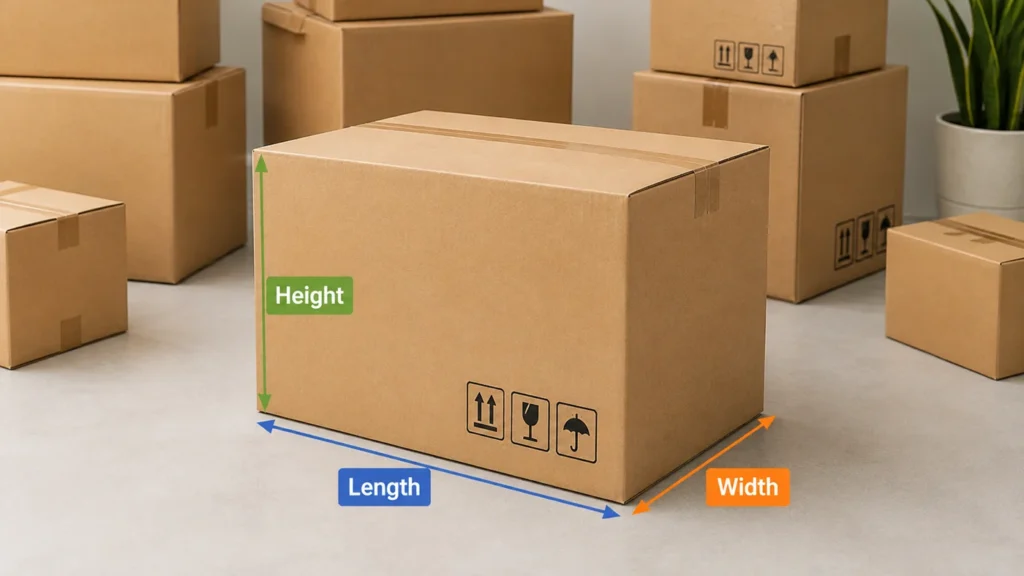
Length, Width, Height, and Dimensions describe the standard order used to measure packaging boxes. Length is measured first, width second, and height last, allowing packaging manufacturers, shipping companies, and retailers to work from the same specifications throughout design, production, and shipping. Understanding these measurements helps businesses choose the right box size, reduce shipping costs, improve product protection, and avoid costly production mistakes before packaging is manufactured.
Accurate dimensions influence far more than the size of a box. They affect structural design, material usage, warehouse efficiency, freight costs, and the customer experience, making them one of the most important specifications in every packaging project.
What Do Length Width Height Dimensions Mean?
Length Width Height Dimensions define the three standard measurements used to describe the size of a box. Packaging manufacturers, fulfillment centers, and shipping carriers follow this universal order to ensure everyone works from the same specifications throughout design, production, storage, and transportation. Using the correct sequence also prevents confusion when requesting quotations, approving prototypes, or placing production orders.
Length Is Measured First
Length is the longest side of the box opening when viewed from the top. It is always recorded first because it establishes the primary orientation of the package during structural design, printing, and manufacturing.
For example, if a mailer box measures 12 × 9 × 4 inches, the 12-inch side represents the length. Structural designers use this measurement when preparing dielines, while production teams rely on it to position graphics, fold lines, and closures accurately throughout manufacturing.
Width Is Measured Second
Width is the shorter side of the box opening that runs perpendicular to the length. Although measured second, it is equally important because it determines the overall footprint of the package and helps products remain stable during handling and transportation.
Correct width measurements also improve pallet organization, optimize material usage, and create packaging that fits products without unnecessary empty space.
Height Is Measured Last
Height measures the vertical distance from the bottom of the assembled box to the top edge. This measurement determines how much vertical space is available for the product and any protective materials placed inside the package.
Choosing the correct height helps prevent products from being compressed while eliminating excessive empty space that increases shipping costs and reduces presentation quality.
Is Depth the Same as Height?
For most packaging applications, depth and height refer to the same vertical measurement. Folding cartons, corrugated shipping boxes, and retail packaging generally use the word height, while some industries prefer depth when describing the same dimension.
Regardless of the terminology, confirming the measurement order before production begins helps eliminate misunderstandings between buyers, designers, and manufacturers.
Which Side of a Box Is Length Width and Height?
Businesses ordering custom packaging for the first time often confuse box dimensions by reversing the measurement order. Following the industry-standard sequence ensures suppliers, structural designers, and production teams all interpret the specifications correctly.

Standard Box Measurement Order
Professional packaging manufacturers almost always use the following order:
- Length The longest side of the box opening.
- Width The shorter side of the opening.
- Height The vertical distance from the bottom of the box to the top edge.
Using the same sequence throughout the packaging process improves communication and reduces production errors.
Why Manufacturers Follow This Standard
Consistency becomes increasingly important as packaging moves through multiple production stages. Structural engineers design the box using Length × Width × Height, printing departments prepare artwork around the same dimensions, and quality control teams inspect finished boxes using those approved specifications.
For example, a business shipping subscription products in Mailer Boxes depends on standardized dimensions so the box structure, inserts, printed graphics, and shipping cartons all work together without repeated adjustments during production.
Can the Measurement Order Change?
Most professional packaging manufacturers use Length × Width × Height as the accepted industry standard. Some international suppliers or online marketplaces may display measurements differently, making it important to confirm exactly which side each measurement represents before approving artwork or placing a production order.
Taking a few moments to verify dimensions at the beginning of a project can prevent production delays, unnecessary material waste, and costly remanufacturing.
Why Accurate Box Dimensions Matter
Correct box dimensions do much more than determine the size of a package. They influence product protection, manufacturing efficiency, shipping expenses, warehouse organization, and the customer’s overall experience.
Providing accurate measurements from the beginning helps packaging manufacturers develop boxes that perform as intended throughout production and distribution.
Protect Products More Effectively
Packaging designed around accurate dimensions reduces product movement during storage and shipping. Whether transporting cosmetics, candles, electronics, or gourmet food products, properly fitted boxes require less void fill while lowering the risk of damage.
Reduce Shipping Costs
Many parcel carriers calculate shipping charges using dimensional weight instead of actual product weight. Eliminating unnecessary empty space allows businesses to reduce shipping expenses without sacrificing product protection. Businesses that regularly ship products should also Measure Box Sizes for Shipping before selecting packaging, as accurate measurements help reduce dimensional weight charges and improve shipping efficiency.
Improve Warehouse Efficiency
Consistent packaging dimensions make boxes easier to stack, store, and palletize. Businesses shipping high product volumes often standardize packaging sizes because organized inventory improves warehouse productivity and simplifies fulfillment.
Create Better Product Presentation
Well-proportioned Product Packaging improves shelf appearance while creating a more professional unboxing experience. Packaging designed around the product presents items neatly instead of allowing them to shift inside the box.
Simplify Production
Accurate measurements reduce structural revisions during the design process. When packaging specifications are correct from the start, manufacturers can move more efficiently from prototype approval to full production while minimizing delays and material waste.
How to Measure a Box Correctly?
Accurate measurements are the foundation of successful packaging design. Spending a few extra minutes measuring correctly helps prevent fitting problems, production delays, and unnecessary shipping costs later.
Before measuring, place the box on a flat surface and use a measuring tool appropriate for your packaging project.

Choose the Right Measuring Tool
A tape measure works well for large corrugated cartons and shipping boxes, while a steel ruler provides greater accuracy for folding cartons and retail packaging. For products requiring precise tolerances, such as cosmetics or electronics, digital calipers deliver highly accurate measurements that improve structural design.
Measure an Empty Box
Position the assembled box with its opening facing upward. Measure the longest side first for the length, followed by the shorter side for the width, and finally measure vertically from the bottom panel to the top edge for the height.
Recording measurements in the correct sequence keeps designers, manufacturers, and printers working from the same specifications.
Measure an Existing Box
Boxes that have been compressed during shipping or storage should be returned to their original shape before measuring. Distorted packaging can produce inaccurate dimensions that affect future production runs.
Businesses comparing packaging suppliers usually measure box dimensions before requesting quotations so structural designers can develop packaging that fits products accurately from the first prototype.
Always Measure the Product Before the Box
Every custom packaging project begins with the product rather than the box. Manufacturers first measure the product, evaluate how it will be displayed or shipped, and then determine the internal dimensions needed for a proper fit.
For example, a cosmetics company packaging glass serum bottles may require additional space for molded inserts, while an apparel brand packaging folded garments focuses on minimizing empty space without affecting presentation. Designing packaging around the product allows both businesses to improve protection while using materials more efficiently.
Internal vs External Box Dimensions
Understanding the difference between internal and external box dimensions helps businesses order packaging that fits products correctly while avoiding unexpected shipping or production issues. Although both measurements describe the same box, they serve different purposes throughout the packaging process.
Internal Dimensions
Internal dimensions measure the usable space inside the box where the product, inserts, and protective materials will be placed. Packaging manufacturers rely on these measurements because they determine whether the product fits securely without unnecessary movement.
Providing internal dimensions allows structural designers to build packaging around the product instead of forcing the product to fit a standard box size. This approach improves protection, reduces material waste, and creates a cleaner presentation.
External Dimensions
External dimensions measure the finished size of the assembled box from the outside. Shipping carriers, warehouses, and retailers use these measurements to calculate dimensional weight, pallet layouts, storage capacity, and transportation requirements.
Because external dimensions include the packaging material itself, they are always slightly larger than the available space inside the box.
How Packaging Manufacturers Determine Box Dimensions
Creating custom packaging involves much more than measuring a product and selecting a box size. Packaging manufacturers evaluate how the product will be packed, protected, stored, and shipped before finalizing the structural design.

Product Measurements Come First
Every packaging project begins with the product rather than the box. Structural designers measure the product, review how it will be displayed or shipped, and determine the internal dimensions needed for a secure fit.
Designing packaging around the product reduces unnecessary empty space while helping businesses control material and shipping costs.
Protective Materials Are Included During Design
Products often require additional space for protective components that prevent damage during transportation. Manufacturers account for these materials before finalizing the box dimensions.
Common protective packaging includes:
- Foam inserts for electronics and fragile products
- Paperboard dividers for bottles and candles
- Molded trays for cosmetics and confectionery
- Tissue paper or shrink wrapping for premium retail packaging
Planning for these components early helps avoid costly structural revisions after prototype approval.
Material Thickness Matters
Different packaging materials affect the finished size of a box. Corrugated board occupies more space than folding carton paperboard, while rigid boxes require thicker construction for additional strength.
Experienced packaging manufacturers also review labels, shrink sleeves, or decorative wraps during prototype development. Even small increases in product size can affect the final fit, making early adjustments far less expensive than correcting problems after production begins.
Length Width Height Dimensions Across Different Industries
Although the measurement order remains the same, every industry uses box dimensions differently depending on the product being packaged.
| Industry | Why Accurate Dimensions Matter |
| Cosmetics | Prevents bottles and jars from shifting while allowing room for inserts and protective cushioning. |
| Food & Confectionery | Keeps chocolates, cereal products, and baked goods securely positioned while maintaining an attractive presentation. |
| Apparel | Protects folded garments, reduces wrinkles, and minimizes shipping volume. |
| Electronics | Provides space for foam inserts that absorb impact during transportation. |
| E-commerce & Subscription Boxes | Balances product protection, presentation, and shipping efficiency for multiple items packed together. |
Common Mistakes When Measuring Box Dimensions
Even small measurement errors can create production delays, increase shipping costs, or result in packaging that does not fit the product properly.
Avoid these common mistakes before requesting custom packaging.
- Measuring the outside of the box instead of the usable internal space.
- Reversing the standard Length × Width × Height measurement order.
- Forgetting to include inserts, partitions, or protective cushioning when calculating internal dimensions.
- Ignoring packaging material thickness when comparing internal and external measurements.
- Mixing inches, centimeters, and millimeters within the same project.
Reviewing measurements before prototype approval helps manufacturers identify potential issues early, reducing delays and preventing unnecessary remakes.
Need Help Choosing the Right Box Dimensions?
Choosing the correct Length Width Height Dimensions is one of the simplest ways to improve packaging performance while reducing unnecessary production and shipping costs. Measuring products accurately before packaging is designed helps create boxes that protect products, optimize material usage, and support efficient fulfillment from the first production run.
Whether you’re developing retail packaging, shipping cartons, or custom product boxes, the packaging specialists at Instant Boxes Hub can review your product specifications and recommend dimensions that match your packaging style, shipping requirements, and branding goals.