
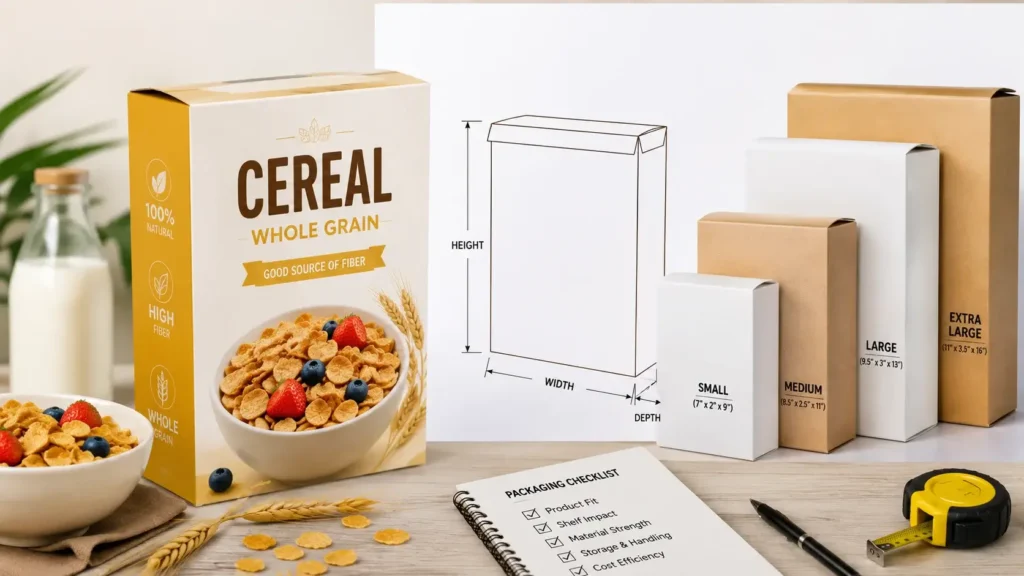
Choosing the right cereal box dimensions is one of the most important decisions in packaging design. While many people focus on graphics and branding, the structural dimensions of the box determine how well the product performs throughout manufacturing, shipping, retail display, and storage. A well-designed cereal box not only protects the product but also reduces material waste, improves production efficiency, and creates a stronger presence on store shelves.
One common misconception is that every cereal box follows the same measurements. In reality, there is no universal cereal box size. Packaging engineers develop box dimensions based on the product’s physical characteristics, filling process, distribution requirements, and retail objectives. For example, a lightweight puffed cereal occupies much more space than a dense granola blend, even when both products have the same net weight. Designing both products in identical cartons would either waste packaging material or compromise product protection.
For this reason, experienced packaging manufacturers calculate internal product volume before determining the external box dimensions. This approach creates a carton that fits the product correctly while supporting efficient manufacturing and transportation.
Standard Cereal Box Dimensions
Although custom packaging has become increasingly popular, most retail cereal cartons fall within a similar size range because these dimensions work well for supermarket shelving, case packing, and pallet distribution.
| Dimension | Typical Measurement |
| Height | 12 inches (30.5 cm) |
| Width | 8 inches (20.3 cm) |
| Depth | 2.5–3 inches (6.4–7.6 cm) |
These measurements are considered industry averages rather than fixed standards. Premium cereals, family-size products, children’s cereals, organic blends, and protein-rich breakfast products often require customized dimensions to accommodate different product densities and packaging goals.
Why Cereal Box Dimensions Matter
The size of a cereal box influences much more than its appearance. Every dimension affects how efficiently the package moves through the supply chain from the filling line to the consumer’s kitchen.
A properly engineered cereal box can help:
- Improve product protection during shipping and handling.
- Reduce product movement inside the carton.
- Optimize pallet stacking and warehouse storage.
- Lower material consumption and freight costs.
- Increase retail shelf efficiency.
- Create a clean, balanced presentation that strengthens brand perception.
Oversized cartons often increase shipping expenses and leave excessive empty space around the inner food-safe bag. On the other hand, undersized cartons may cause filling problems, damage delicate cereal pieces, or reduce structural strength during transportation.
Rather than treating dimensions as simple measurements, successful packaging companies view them as a balance between product protection, production efficiency, logistics, and customer experience. Establishing that balance early in the design process helps prevent costly revisions while creating packaging that performs reliably from manufacturing through final sale.
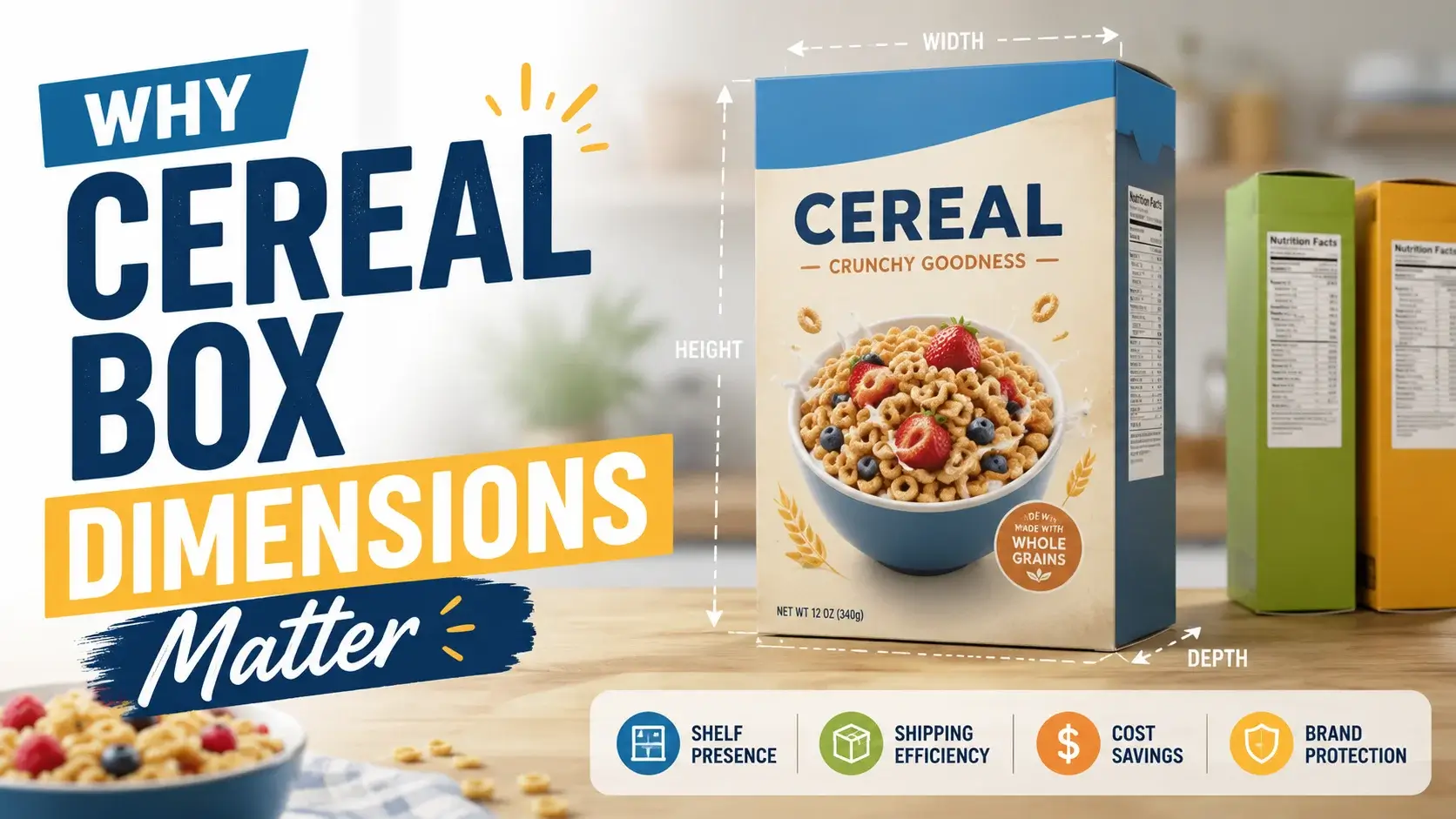
How Packaging Engineers Determine the Right Cereal Box Size
Professional packaging design starts with the product not the carton. Before creating a dieline or selecting paperboard, packaging engineers evaluate how the cereal behaves during filling, transportation, storage, and retail display. This process helps ensure the finished package is both functional and cost-effective.
Step 1: Calculate Product Volume
The first step is determining the cereal’s actual occupied volume rather than relying only on its weight. Two cereals may each weigh 18 ounces, yet require completely different box dimensions because of their density.
For example:
- Puffed rice and corn cereals contain more air, requiring larger cartons.
- Granola clusters and protein cereals are denser and usually fit into smaller cartons.
- Flake cereals need additional space to reduce crushing during shipping.
Designing around product volume minimizes empty space while maintaining product integrity throughout distribution.
Step 2: Account for Manufacturing Tolerances
Once the required internal volume is established, engineers add small manufacturing allowances that help the carton perform consistently during production.
These allowances typically include:
- Space for the food-grade inner liner.
- Paperboard thickness (board caliper).
- Glue flap dimensions.
- Folding and scoring tolerances.
- Automated filling and sealing requirements.
Although these adjustments are only a few millimeters, they help prevent production issues, reduce waste, and improve the consistency of every finished carton.
Standard vs. Custom Cereal Box Dimensions
While standard cereal box sizes work well for many retail products, they aren’t always the most efficient choice. Custom dimensions allow businesses to optimize packaging around their specific product and supply chain.
| Box Type | Typical Size | Best Application |
| Mini | 5–6″ × 3–4″ × 1–1.5″ | Sample packs, hotels, schools |
| Standard | 12″ × 8″ × 2.5–3″ | Most grocery store cereals |
| Family Size | 13–14″ × 8–9″ × 3–4″ | Large households and bulk products |
| Custom | Based on product specifications | Premium brands, specialty cereals, subscription boxes |
Choosing between standard and custom packaging depends on factors such as product volume, shipping efficiency, branding goals, and production requirements rather than cost alone.
A Practical Framework for Choosing the Right Dimensions
Instead of selecting dimensions based on another brand’s packaging, evaluate your product using these questions:
- What is the product’s actual filled volume?
- How fragile is the cereal during transportation?
- Will the package be displayed on retail shelves or shipped directly to consumers?
- Does the product require premium printing or specialty finishes?
- Can smaller dimensional changes improve pallet efficiency and reduce freight costs?
Answering these questions before production begins helps create packaging that protects the product, supports efficient manufacturing, and reduces unnecessary material usage.
How Our Packaging Team Approaches Box Design
At Instant Boxes Hub, we don’t recommend dimensions based solely on industry averages. Every packaging project begins with understanding the product itself. Our team evaluates product volume, structural requirements, distribution methods, and branding objectives before recommending a carton size.
This practical approach helps businesses avoid oversized packaging, improve logistics, and create cereal boxes that deliver both reliable performance and a professional appearance from production through retail display.
Additional Factors That Influence Cereal Box Design
Selecting the right cereal box dimensions is only one part of designing effective packaging. Several structural and branding decisions also influence how well the finished carton performs throughout its lifecycle.
For example, choosing the appropriate paperboard grade helps the box withstand compression during warehousing and transportation. Likewise, high-quality printing, protective coatings, and premium finishing options enhance shelf appeal while maintaining the carton’s durability during handling.
If you’re developing a complete packaging solution, it’s also worth considering how your cereal box integrates with your broader packaging strategy. Related packaging elements such as custom cereal boxes, paperboard folding cartons, food packaging, and custom printed boxes should complement one another to create a consistent brand experience while supporting efficient production and distribution.

Final Thoughts
There is no single “perfect” cereal box dimension. The ideal size depends on your product’s volume, structural requirements, production process, and distribution strategy. While standard dimensions provide a useful starting point, custom packaging often delivers better material efficiency, stronger product protection, and improved shelf presentation.
At Instant Boxes Hub, we believe effective packaging begins with understanding the product before designing the carton. By combining practical engineering principles with high-quality materials and thoughtful structural design, businesses can create cereal packaging that protects the product, streamlines logistics, and reinforces a professional brand image. Investing in the right dimensions early in the packaging process helps reduce production challenges, improve operational efficiency, and deliver a better experience for both retailers and consumers.