
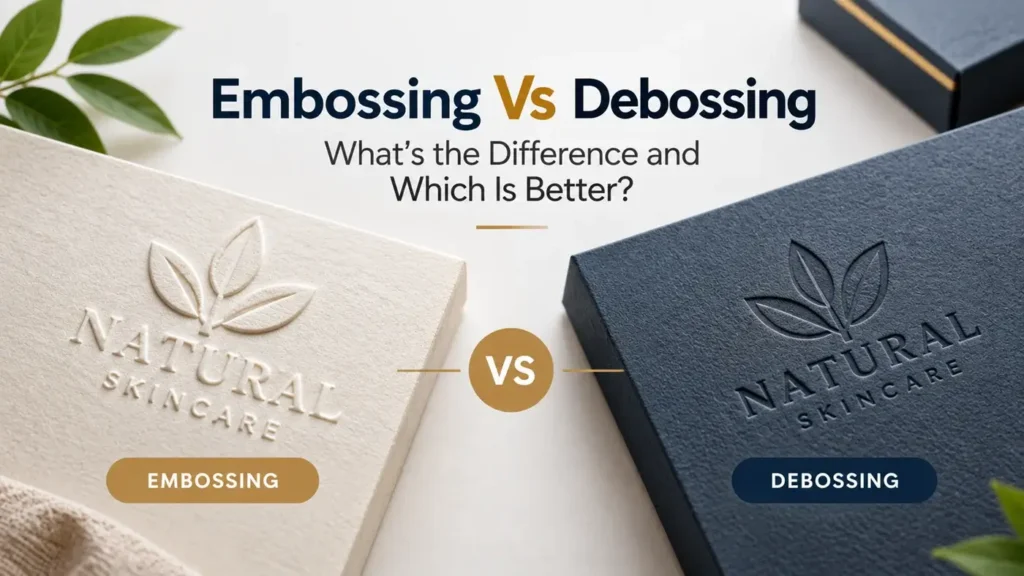
Embossing creates a raised impression above a material’s surface, while debossing presses a design into the surface to create a recessed effect. Both finishing techniques add physical dimension to logos, lettering, and packaging artwork, but they produce distinctly different visual and tactile results.
Neither finish is automatically better. The right choice depends on your artwork, substrate, packaging structure, desired depth, production requirements, and the type of presentation you want to create.
Embossing Vs Debossing: Quick Comparison
The easiest way to understand embossing vs debossing is to compare how each technique changes the material.
| Feature | Embossing | Debossing |
| Surface Effect | Raised above the surface | Pressed below the surface |
| Tactile Feel | Raised and dimensional | Recessed and dimensional |
| Visual Impact | Creates prominent relief | Creates subtle depth |
| Common Uses | Logos, lettering, packaging details | Logos, lettering, packaging, leather goods |
| Materials | Paper, cardstock, paperboard, specialty stocks | Paper, paperboard, leather, rigid stocks |
| Blind Finish | Blind embossing | Blind debossing |
| Foil Compatibility | Can be combined with foil | Can be combined with foil |
| Cost | Depends on project specifications | Depends on project specifications |
| Best For | Prominent raised details | Restrained recessed details |
Unlike ordinary printing, these processes physically alter the substrate. Ink, foil, and other finishes may then be used separately or alongside the dimensional impression.
What Is Embossing and How Does It Work?
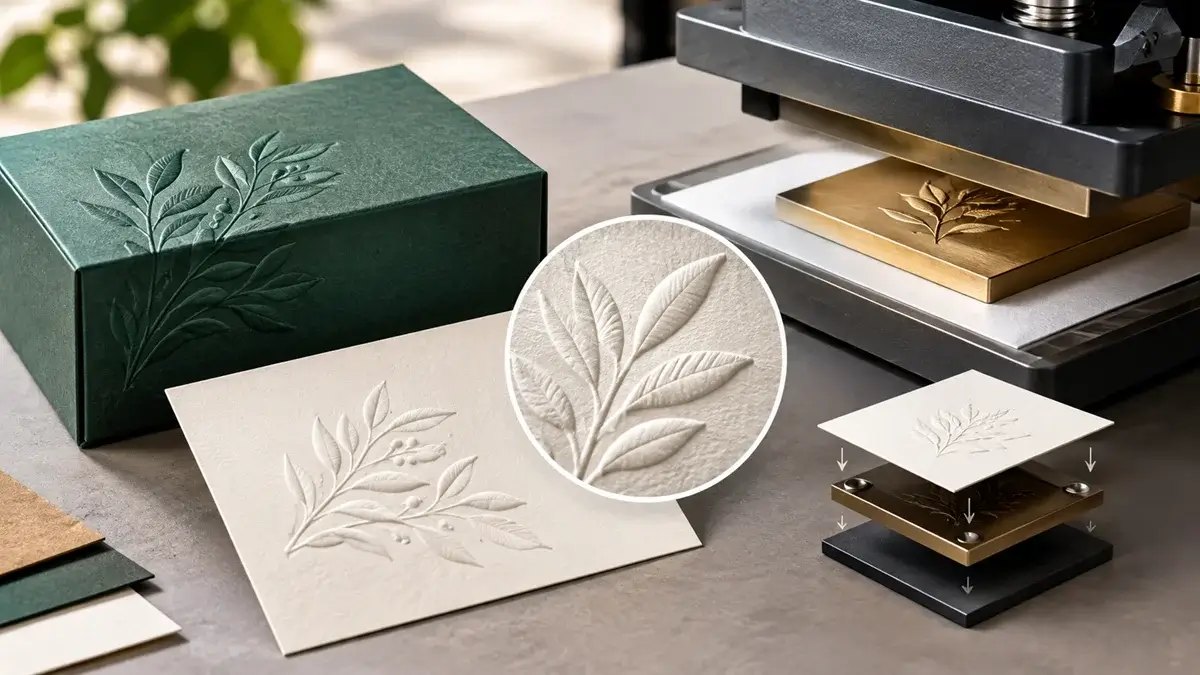
Embossing is a finishing process that forms selected artwork above the surrounding surface. Purpose-made tooling and controlled pressure shape the substrate to create a raised impression that can be both seen and felt.
An embossed logo catches light along its raised edges and creates natural highlights and shadows. The quality of the result depends on factors such as the substrate, artwork, tooling, impression depth, and production setup.
Embossing is commonly applied to logos, brand names, monograms, lettering, stationery, box panels, and decorative packaging details. On Custom Embossed Gift Boxes, for example, a raised logo can become a tactile focal point without requiring complex printed graphics across the entire surface.
What Is Debossing and How Does It Work?
Debossing presses artwork below the surrounding material to create a recessed or indented impression. The resulting depth and shadow make logos, typography, and selected graphic elements visible and tactile without raising them from the surface.
As with embossing, the finished result depends on the artwork, tooling, pressure, substrate, and intended impression depth. Debossing should therefore not be treated simply as embossing performed in reverse, because each project needs to be evaluated according to its material and production requirements.
Debossing is commonly found on packaging, stationery, book covers, cards, leather goods, and branded products where a recessed dimensional treatment complements the overall design.
Key Differences Between Embossing and Debossing
The fundamental difference is raised versus recessed, but that change in direction also influences appearance, touch, artwork behavior, and production.
Raised Vs Recessed Appearance
Embossing projects the artwork above the surrounding surface, giving logos and design elements physical prominence. Debossing creates an indentation, using recessed edges and shadows to establish depth.
Neither effect is inherently more premium. The better finish is the one that supports the material, artwork, and intended visual identity.
Tactile Feel and Visual Impact
Both finishes create a tactile experience that flat printing alone cannot reproduce. Embossing allows the fingers to move over raised relief, while debossing creates a noticeable indentation below the surrounding surface.
Their interaction with light also differs. Raised contours create highlights and shadows around their edges, whereas recessed impressions create depth and shadow within the design.
Tooling, Artwork, and Impression Depth
Embossing and debossing rely on appropriate tooling and controlled pressure, but exact production configurations vary. It is therefore inaccurate to assume that every embossing job always requires a fixed number of dies while every debossing job uses only one.
Artwork also matters. Extremely small text, fine lines, tightly spaced elements, and excessive depth may not reproduce equally well on every substrate, so designs should be reviewed against the actual material and production capabilities.
Which Materials Work Best for Embossing and Debossing?
Paper, cardstock, paperboard, specialty stocks, rigid-board wrapping materials, leather, and other formable substrates may support embossing or debossing. Suitability depends not only on thickness but also on density, coating, flexibility, texture, and the depth of impression required.
For packaging such as Custom Rigid Boxes, the board, wrapping material, box construction, and artwork placement should be considered together. A finish that performs well on one surface may behave differently on another, making material-specific production guidance important.
Embossing Vs Debossing for Packaging and Logos
Both techniques work particularly well when dimensional finishing is focused on selected branding elements rather than applied without purpose. Logos, brand names, monograms, patterns, and short typography are common choices for packaging.
Embossing is generally suitable when you want a logo or design to rise from the surface and become more physically prominent. Debossing is useful when recessed depth and a more restrained tactile effect better complement the packaging.
Placement also matters. Dimensional artwork should be planned around folds, score lines, edges, seams, and other structural areas of the package rather than judged only from a flat digital design.
Blind Embossing Vs Blind Debossing
Blind embossing creates raised artwork without using printed ink or foil to define it, while blind debossing creates the same color-free approach as a recessed impression. In both cases, the material itself provides much of the visual character through texture, depth, highlights, and shadows.
These finishes work particularly well when the substrate is intended to remain visible as part of the design. They can create recognizable branding without adding another printed color or metallic treatment.
Can Embossing and Debossing Be Combined With Foil?
Both techniques may be combined with foil when the substrate, artwork, tooling, and production method support the intended result. Foil embossing combines raised dimension with metallic, pigmented, or other foil effects, while a debossed treatment may place foil within or alongside a recessed design.
Registration becomes important when foil or printed artwork must align precisely with the dimensional impression. Poor alignment can become particularly noticeable around typography, logos, and defined edges, so artwork and tooling should be prepared as part of the same finishing plan.
Embossing Vs Debossing: Which Costs More?
Neither process should automatically be described as cheaper. Actual pricing depends on the tooling, substrate, artwork complexity, impression dimensions and depth, production quantity, setup, and any additional printing or finishing requirements.
A simple blind impression and an intricate foil-enhanced dimensional design have very different production requirements even if both involve embossing or debossing. Accurate comparisons therefore require the manufacturer to review the actual artwork, material, quantity, and desired finish.
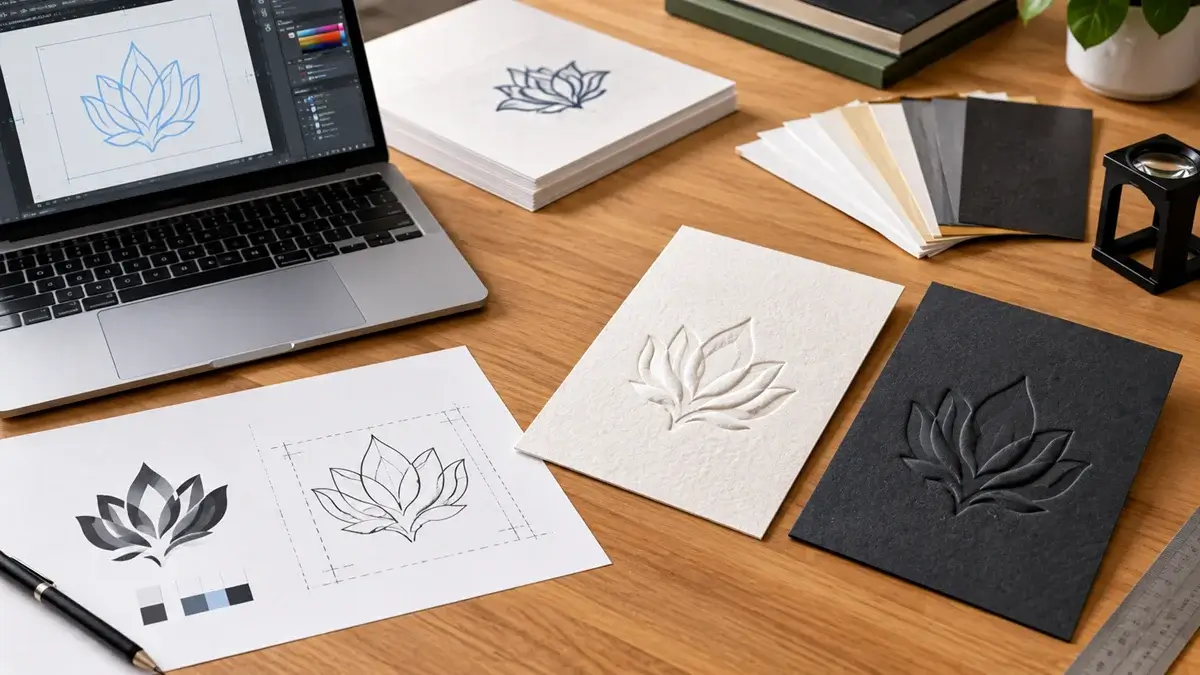
How to Prepare Artwork for Embossing or Debossing
Good dimensional finishing begins with artwork that accounts for how the material will physically change. Keep these practical considerations in mind before production:
- Control fine details and small text: Extremely thin lines, tiny lettering, and tightly spaced elements may lose definition when converted into a physical impression. Artwork should be reviewed against the selected substrate and production capabilities rather than designed around universal minimum measurements.
- Match depth to the artwork: A deeper impression does not automatically produce a better result. Depth should suit the design size, spacing, substrate, and level of detail so the finished artwork remains clean and recognizable.
- Plan around the packaging structure: Keep critical dimensional artwork clear of problematic folds, score lines, seams, and edges where necessary. Exact placement requirements depend on the box or carton construction and manufacturing process.
Common Embossing and Debossing Mistakes to Avoid
Many finishing problems can be prevented before tooling or production begins. The most important issues usually involve artwork, materials, and structural planning:
- Choosing the finish before the material: Different substrates respond differently to pressure and depth. Thickness, density, coating, and surface texture should be evaluated before finalizing the dimensional treatment.
- Making artwork unnecessarily complex: Intricate details that look sharp on screen may not translate cleanly into relief or indentation. Simplifying nonessential details can improve definition while preserving the intended identity.
- Relying only on a digital mockup: A screen can show placement but cannot accurately communicate tactile depth or material behavior. When the physical feel is important, a suitable sample or production proof provides more useful information before a larger run.
Embossing or Debossing: Which Should You Choose?
Choose embossing when you want selected artwork to project above the material and become a prominent tactile feature. It is particularly effective for logos, lettering, and packaging details intended to attract attention through raised dimension.
Choose debossing when recessed depth better fits the visual direction. It works well for branding that benefits from indentation, shadow, and a more restrained dimensional treatment.
The final decision should consider the artwork, substrate, packaging construction, desired impression, other finishes, production capabilities, and budget rather than assuming one technique is universally superior.
Conclusion: Choosing Between Embossing and Debossing
Embossing raises artwork above the material, while debossing presses it below the surface. The best choice goes beyond that basic difference because substrate characteristics, artwork complexity, tactile effect, impression depth, packaging construction, production requirements, and budget all influence the result.
Working with an experienced Custom Packaging Supplier in USA allows the artwork, material, structure, and finishing requirements to be evaluated together before production. The goal is not simply to choose embossing or debossing, but to select the finish that reproduces the design effectively and supports the intended packaging experience.