Types of rigid packaging include paperboard rigid boxes, plastic containers, metal packaging, and glass bottles or jars. Each material retains a defined shape while providing different levels of protection, durability, presentation, and product compatibility. Grand View Research valued the global rigid packaging market at USD 479.9 billion in 2023.
Rigid packaging includes more than premium boxes because bottles, jars, cans, tins, tubs, and other shape-retaining containers also belong to this category. Paperboard rigid boxes are further available in structures such as two-piece, magnetic closure, drawer, shoulder and neck, telescope, hinged-lid, collapsible, and cylinder boxes. Understanding these options can help businesses select packaging that suits their products, branding, storage, and shipping needs.
What Is Rigid Packaging?
Rigid packaging is packaging that largely retains its shape during normal handling instead of easily bending or conforming around the product. Paperboard, plastic, metal, and glass are among the most common materials used for rigid packaging. Boxes, bottles, jars, cans, tins, trays, and tubs are familiar examples.
Rigid boxes are one type of rigid packaging rather than another name for the entire category. They are commonly manufactured from thick chipboard or greyboard covered with printed or specialty paper. Businesses can use custom rigid boxes when they need structured paperboard packaging with extensive options for branding and presentation.
Types of Rigid Packaging
Rigid packaging can be classified according to its primary material, with paperboard, plastic, metal, and glass representing four major categories.
Paperboard Rigid Packaging
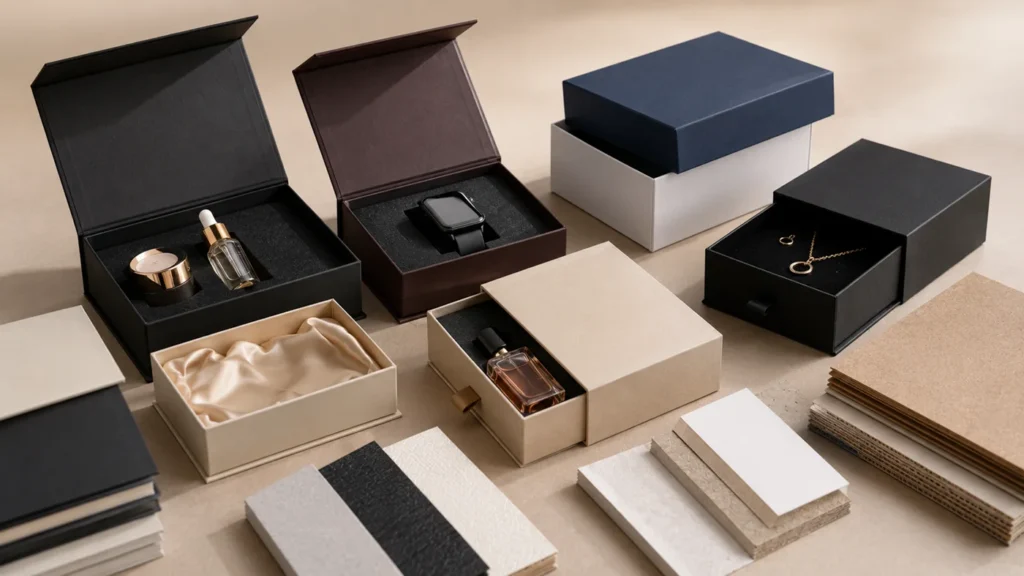
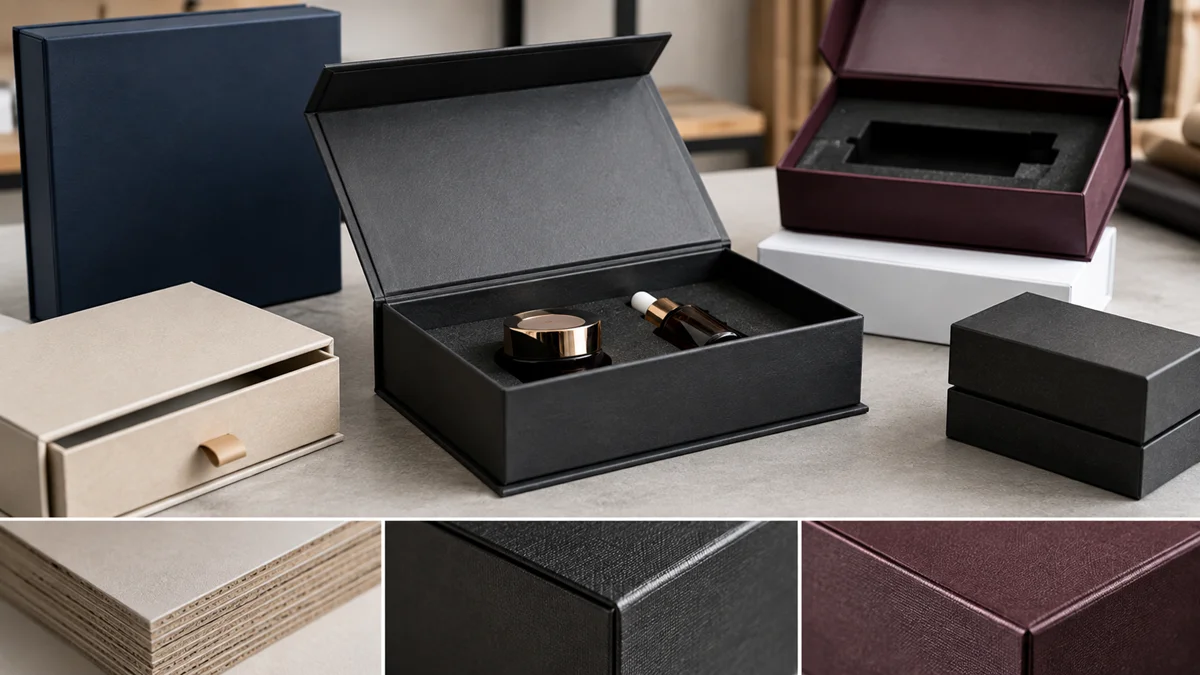
Paperboard rigid packaging commonly includes set-up boxes made from thick chipboard or greyboard covered with a paper wrap. The sturdy construction provides large surfaces for printing, specialty papers, foil stamping, embossing, and other branding elements. Jewelry, cosmetics, electronics, apparel, gifts, and other premium products frequently use these boxes.
Fitted inserts can also be added to organize products and reduce unwanted movement inside the package. Traditional set-up boxes retain their finished dimensions during storage, whereas collapsible structures can be supplied in a flatter form. Grand View Research reported that paper and paperboard accounted for 47.2% of global custom packaging revenue in 2025.
Rigid Plastic Packaging
Rigid plastic packaging includes bottles, jars, tubs, trays, and containers made from materials such as PET, HDPE, and polypropylene. These materials can be formed into different sizes, shapes, closures, and dispensing systems. Food, beverages, personal care products, household goods, and other consumer products commonly use rigid plastic packaging.
The right plastic depends on the product, required barrier protection, temperature conditions, and closure design. Food, cosmetic, and pharmaceutical applications may also have specific material and regulatory requirements. Recycling options can differ according to the resin, package construction, attached components, and local collection system.
Metal Packaging
Metal rigid packaging includes cans, tins, and other containers commonly made from steel or aluminum. These structures can provide strong physical protection and suitable barrier properties for products that require durable containment. Food, beverages, personal care items, and specialty products are common applications.
Metal containers can also support printed graphics, coatings, shaped structures, and different opening systems. Product chemistry, internal coatings, filling requirements, and distribution conditions should be considered when selecting an appropriate metal package.
Glass Packaging
Glass packaging commonly includes bottles and jars for beverages, foods, fragrances, cosmetics, and personal care products. It provides a hard, shape-retaining container that can be transparent, colored, or decorated according to product and branding requirements. Grand View Research reported that bottles and jars represented 51.5% of global rigid packaging revenue in 2023.
Glass also has practical trade-offs because its weight and potential for breakage can affect shipping, handling, and secondary packaging requirements. Closure compatibility, filling conditions, product sensitivity, and distribution should therefore be considered before selecting glass packaging.
Types of Rigid Boxes
Paperboard rigid boxes are available in different structures, with each style creating a particular opening mechanism and presentation experience.
Two-Piece Rigid Boxes
Two-piece rigid boxes consist of a separate lid and base. Their simple construction creates a classic opening experience while supporting printed wraps, inserts, foil stamping, embossing, and other finishes. Jewelry, apparel, gifts, and premium retail products commonly use this style.
Magnetic Closure Boxes
Magnetic closure boxes typically feature a hinged lid or flap with concealed magnets that keep the package closed. Their controlled opening mechanism makes them suitable for cosmetics, electronics, gift sets, accessories, and other presentation-focused products. Businesses can consider magnetic closure boxes when the opening experience is an important part of the package.
Drawer Boxes
Drawer boxes combine an outer sleeve with an inner tray that slides outward. This structure creates a gradual product reveal while allowing inserts to keep smaller items organized. Jewelry, cosmetics, confectionery, accessories, and small electronics commonly use drawer-style packaging.
Shoulder and Neck Boxes
Shoulder and neck boxes use a base, lid, and raised inner neck to create a layered structure. The visible neck separates the lid and base while adding depth to the overall presentation. Fragrances, watches, jewelry, cosmetics, and premium gifts commonly use this format.
Telescope Boxes
Telescope boxes feature a lid that overlaps a substantial portion of the base. Their deeper cover distinguishes them from many standard lid-and-base boxes while maintaining a straightforward opening mechanism. They can be used for apparel, gifts, accessories, and other presentation products.
Hinged Lid Boxes
Hinged lid boxes have a lid permanently attached to the base rather than a completely removable cover. Book-style and some clamshell structures use this mechanism to keep both sections connected during opening and closing. Electronics, jewelry, gift sets, and presentation kits are common applications.
Collapsible Rigid Boxes
Collapsible rigid boxes can fold into a flatter form before being assembled into their final shape. This design can reduce storage and transportation volume compared with permanently assembled set-up boxes. Apparel, gifts, e-commerce products, and presentation kits can benefit from this structure.
Cylinder Rigid Boxes
Cylinder rigid boxes use a round structure rather than the rectangular shape associated with most set-up boxes. Their distinctive profile works particularly well for products that fit naturally within cylindrical packaging. Bottles, candles, confectionery, gifts, and specialty products are common examples.
Why Businesses Use Rigid Boxes
Rigid boxes are commonly selected when businesses need to combine structural support with customizable presentation. Their thick board construction, multiple structural styles, and broad range of finishing options make them particularly relevant for premium retail packaging.
They can also accommodate fitted inserts for better product organization and presentation. Printing, foil stamping, embossing, debossing, specialty wraps, and other treatments provide additional branding opportunities without changing the fundamental purpose of the box.
Rigid Packaging vs Flexible Packaging
Rigid packaging retains a defined shape, while flexible packaging bends, folds, or conforms more easily around its contents. Bottles, jars, cans, tubs, and set-up boxes are rigid examples, whereas films, wraps, sachets, and many pouches are flexible formats.
Flexible packaging can reduce material weight and storage volume in some applications, while rigid packaging provides dimensional stability and different stacking, dispensing, and presentation characteristics. Neither is universally better because the right choice depends on product protection, barrier requirements, filling methods, shipping, storage, and convenience.
Rigid Packaging Customization Options
Rigid paperboard boxes can use several customization techniques to improve branding, presentation, and product organization.
- Foil stamping: Foil stamping applies metallic, pigmented, or specialty foil to selected logos, text, and graphics. It can create visual contrast and emphasize specific branding elements without changing the box structure.
- Embossing and debossing: Embossing raises selected design elements, while debossing presses them into the surface. Both methods can add tactile detail to logos, patterns, and product names.
- Printed wraps: Printed or specialty-paper wraps form the visible exterior of many rigid boxes. Colors, graphics, typography, textures, and other brand elements can be incorporated into the wrap.
- Packaging inserts: Inserts position products inside the box and can improve organization, protection, and presentation. Businesses can use custom box inserts according to product size, weight, fragility, and desired presentation.
How to Choose the Right Rigid Packaging
The right rigid packaging should protect the product while meeting practical requirements for presentation, shipping, storage, and budget.
- Product requirements: Consider dimensions, weight, fragility, sensitivity, and required protection before selecting a structure. The package and any inserts should fit the product properly and limit unnecessary movement.
- Material compatibility: Foods, beverages, cosmetics, pharmaceuticals, and other sensitive products may have specific contact or barrier requirements. Material suitability and applicable regulations should be verified before commercial production.
- Brand presentation: Two-piece, magnetic, drawer, shoulder and neck, and other rigid-box structures create different presentation experiences. The chosen format should support the product and brand rather than being selected only for appearance.
- Shipping and storage: Package weight, finished dimensions, warehouse space, and transportation requirements can affect overall costs. Collapsible rigid boxes may be worth considering when assembled set-up boxes require excessive storage space.
- Cost and sustainability: Material, printing, finishes, inserts, assembly, order quantity, and freight can all affect total packaging expenditure. Material use, recycled content, package weight, reuse potential, and local recycling infrastructure should also be considered when evaluating environmental performance.

Conclusion
Rigid packaging includes paperboard, plastic, metal, and glass formats, and each material provides different characteristics for product protection, presentation, storage, and compatibility. Paperboard rigid boxes offer additional structural choices, including two-piece, magnetic closure, drawer, shoulder and neck, telescope, hinged-lid, collapsible, and cylinder designs.
The best option depends on the product rather than one packaging type being suitable for every application. Businesses should consider product dimensions, fragility, material compatibility, branding, shipping, storage, budget, and sustainability requirements together when making a decision. For presentation-focused products, businesses can choose custom rigid boxes with a structure, inserts, printing, and finishing options tailored to their product and branding needs.