
Offset printing is a commercial printing method that transfers ink from a metal printing plate to a rubber blanket before applying it to paper or other printing materials. The indirect transfer process creates sharp images, accurate colors, and consistent results, making offset printing a preferred choice for packaging, publishing, marketing materials, and large-volume printing projects.
Offset printing works through multiple stages, including artwork preparation, color separation, plate creation, ink transfer, and finishing. The method provides professional-quality output for businesses that require consistent branding across thousands of printed products, including product boxes, brochures, catalogs, magazines, and retail packaging.
What Is Offset Printing?
Offset printing, also known as offset lithography, is a printing technique where an inked image moves from a printing plate to a rubber blanket cylinder and then transfers onto the final printing surface. The indirect transfer system improves print quality because the flexible rubber blanket creates a smoother connection between the image and the material.
Offset printing follows the principle of oil and water separation, where ink attaches to specific image areas while non-printing areas remain protected by a water-based solution. The printing process commonly uses CMYK colors, including cyan, magenta, yellow, and black, to reproduce detailed graphics and accurate color combinations.
Offset printing is widely used in industries where professional appearance and consistent quality are important. Packaging manufacturers, publishers, retailers, and businesses rely on offset printing for products such as folding cartons, books, newspapers, brochures, stationery, and promotional materials.
Why Is Offset Printing Called Offset Printing?
Offset printing gets its name from the way ink transfers during production. The ink does not move directly from the printing plate to the final material; instead, the image first transfers to a rubber blanket before reaching paper or another substrate.
The additional transfer stage improves image consistency and allows the printing process to work effectively on different materials. The rubber blanket cylinder creates an even surface that helps produce clearer graphics and smoother color reproduction.
How Offset Printing Works
The offset printing process involves several stages that transform digital artwork into finished printed products. The following steps explain how offset printing creates professional-quality results.
Artwork Preparation and Prepress Setup
The prepress stage prepares the design before printing begins. Designers create print-ready files, check image resolution, adjust layouts, and convert colors into the CMYK format required for commercial printing.
Color separation creates individual layers for cyan, magenta, yellow, and black. Professional printers review artwork alignment, bleed settings, and proof samples to maintain accuracy before production starts.
Creating the Printing Plate
The printing plate stores the image information required for ink transfer during production. Aluminum plates are commonly used because they provide durability and precise image reproduction throughout large printing runs.
Each CMYK color requires a separate plate to create the complete design. The printing plate controls the areas where ink appears while keeping non-printing areas free from ink.
Transferring Ink Through the Blanket Cylinder
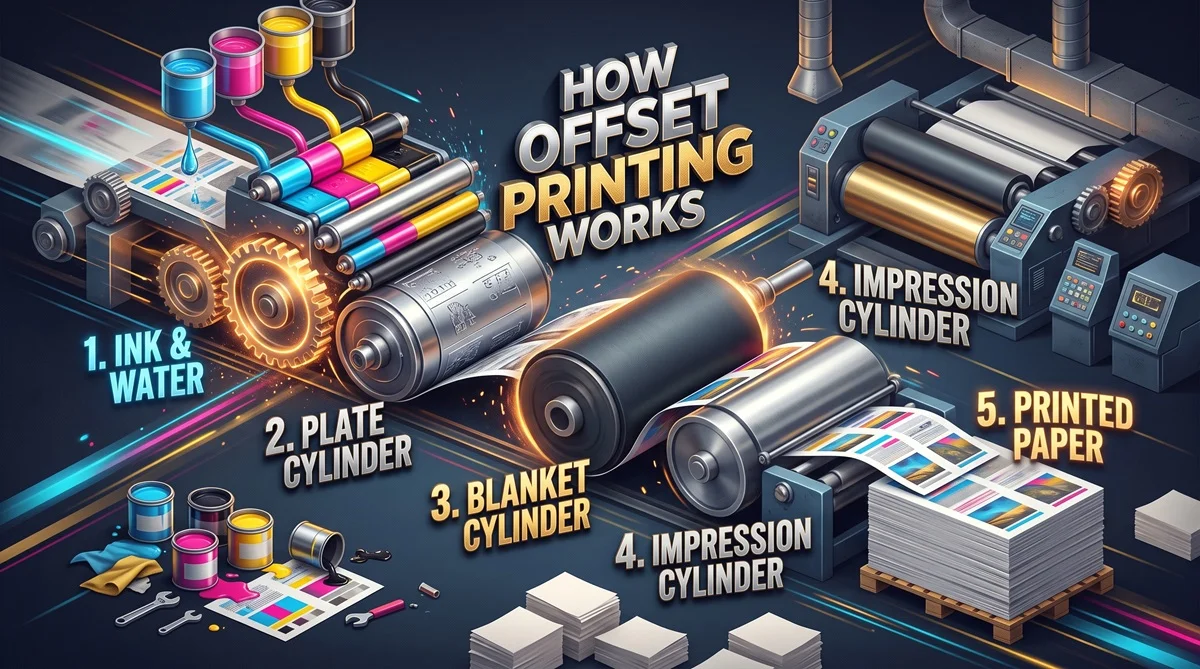
The ink rollers apply ink to the image areas of the printing plate. The plate cylinder then transfers the inked design onto the rubber blanket cylinder before the image reaches the final printing material.
The blanket cylinder improves consistency by creating a smooth transfer surface between the plate and substrate. This process helps offset printing produce detailed images, clean lines, and reliable color output.
Printing the Final Image
The impression cylinder presses the printing material against the inked blanket cylinder to complete the transfer process. The pressure allows the image to move from the blanket onto paper, cardboard, or another selected material.
After printing, manufacturers inspect the output and apply finishing techniques such as coating, lamination, cutting, folding, and embossing. These finishing options improve durability and create a premium appearance for commercial products.
Types of Offset Printing
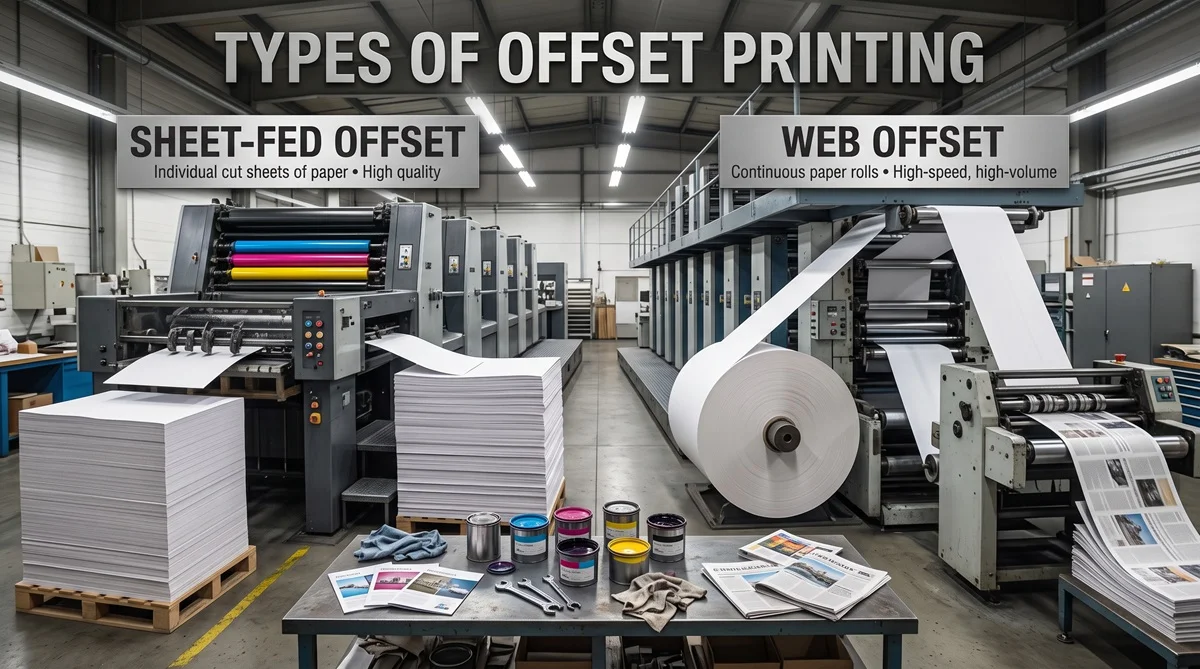
Offset printing is mainly divided into two types based on how the printing material moves through the machine.
- Sheet-Fed Offset Printing: Sheet-fed offset printing uses individual sheets that pass through the printing press one at a time. This method is commonly used for packaging, brochures, business stationery, and commercial materials that require detailed designs and premium print quality.
- Web Offset Printing: Web offset printing uses continuous paper rolls that move through the printing press at high speed. This method supports large-scale production for newspapers, magazines, and publications where efficiency and volume are important.
Benefits of Offset Printing
The following benefits make offset printing a popular choice for businesses requiring professional-quality printing and consistent production.
- High-Quality Printing: Offset printing produces sharp graphics, detailed images, and smooth color transitions that improve the appearance of printed materials. The controlled ink transfer process helps businesses maintain professional branding across large quantities.
- Cost Efficiency for Large Quantities: Offset printing becomes more economical when production volume increases. The initial preparation process requires setup, but the cost per printed unit decreases during larger production runs.
- Consistent Color Accuracy: Offset printing provides reliable color reproduction through CMYK separation and controlled ink application. Brands that require consistent packaging designs and marketing materials benefit from stable color results.
- Material Flexibility: Offset printing works with different materials, including coated paper, uncoated paper, cardboard, and packaging substrates. The flexibility makes the technique suitable for publishing, retail packaging, and promotional products.
- Professional Brand Presentation: Offset printing creates a premium visual appearance through detailed artwork and high-quality finishes. Businesses use this printing method to strengthen product presentation and create memorable customer experiences.
Limitations of Offset Printing
Understanding the limitations of offset printing helps businesses choose the right printing solution for their requirements.
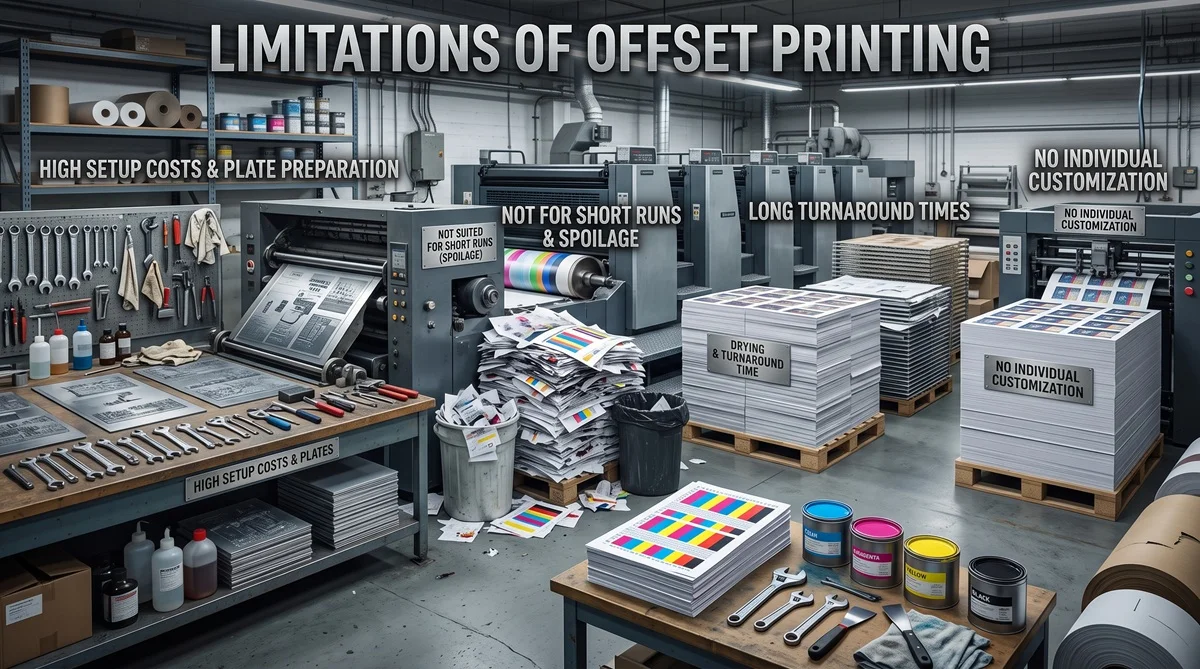
- Higher Setup Requirements: Offset printing requires plate preparation, artwork approval, and machine setup before production begins. These preparation stages increase initial costs compared with printing methods that do not require physical plates.
- Longer Preparation Time: Offset printing involves multiple production steps before final printing starts. The prepress process and quality checks require additional planning compared with faster printing alternatives.
- Less Suitable for Small Quantities: Offset printing provides the greatest value for larger production volumes. Smaller projects with frequent design changes may require different printing approaches.
Offset Printing vs Digital Printing
Offset printing and digital printing are two common printing methods with different advantages. The right choice depends on production quantity, customization requirements, and project goals.
| Factor | Offset Printing | Digital Printing |
| Setup | Requires printing plates | No printing plates required |
| Best For | Large-volume projects | Small and medium quantities |
| Cost | Lower cost per unit at scale | Lower initial setup cost |
| Quality | Consistent commercial-quality output | High-quality modern printing |
| Customization | Limited variable printing | Better personalization options |
Businesses choose offset printing when they require consistent quality across large quantities. Digital printing is more suitable for projects requiring smaller batches, quick changes, or personalized designs.
Read our detailed comparison guide on offset printing vs digital printing.
Common Applications of Offset Printing
Offset printing supports multiple industries where quality, consistency, and professional presentation are important.
Packaging Products: Offset printing plays an important role in packaging production because brands require accurate colors, detailed graphics, and premium finishes. Manufacturers use offset printing for retail boxes, folding cartons, and product packaging where visual presentation influences customer perception. Businesses looking for complete custom packaging solutions find packaging formats designed to support branding, protection, and professional product presentation.
Premium packaging formats such as custom sleeve boxes use detailed printing and finishing techniques to create an attractive product presentation. Offset printing helps maintain consistent branding across large production quantities.
- Publishing Materials: Publishers rely on offset printing for books, magazines, newspapers, and catalogs because the method delivers consistent quality across thousands of copies. The process provides clear text reproduction and detailed image printing.
- Marketing Materials: Businesses use offset printing for brochures, flyers, posters, and stationery to represent their brand professionally. Accurate colors and sharp graphics help printed materials create a stronger visual impact.
Factors Affecting Offset Printing Cost
Several factors influence the final cost of an offset printing project.
- Printing Quantity: Production volume affects pricing because setup expenses are distributed across the total number of printed units. Larger orders usually provide better cost efficiency.
- Material Selection: Paper type, cardboard thickness, and specialty materials influence production costs and the final appearance of printed products.
- Colors and Finishing: Additional colors, coatings, lamination, embossing, and special finishes affect the overall production requirements and final pricing.
Offset printing remains a reliable printing solution for businesses that require high-quality output, accurate colors, and efficient large-scale production. The combination of professional results, material flexibility, and consistent performance makes offset printing valuable for packaging, publishing, and commercial industries.