
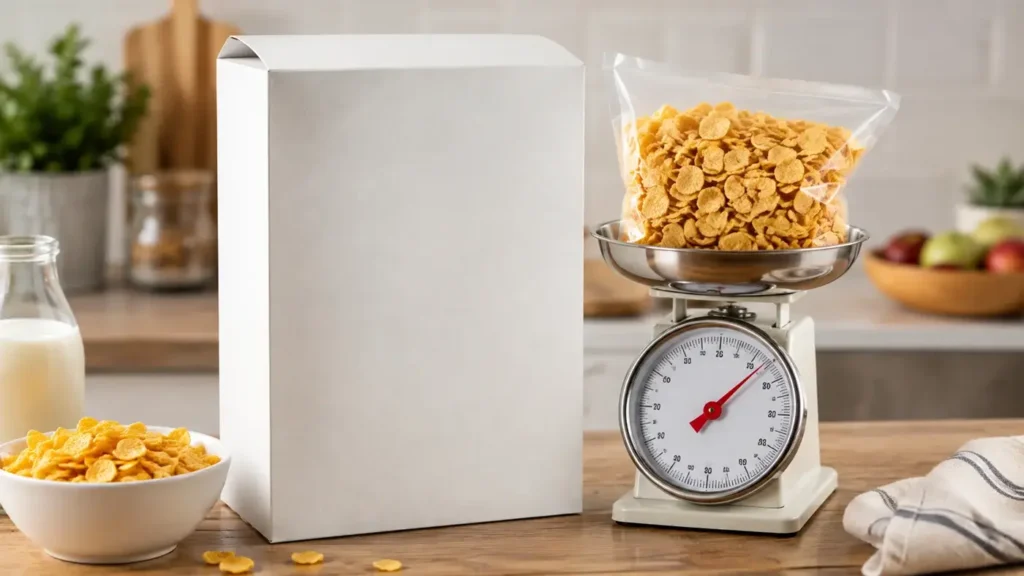
A standard box of cereal typically weighs between 10 and 18 ounces (283–510 grams), although the exact weight depends on the cereal variety, package size, and the number of servings inside the box. Smaller single-serve cartons may contain as little as 1–2 ounces, while family-size packages can hold more than 24 ounces of cereal. The weight printed on the package refers to the net weight, which includes only the cereal and not the box or inner packaging.
Understanding cereal box weight is useful for more than satisfying curiosity. Consumers compare package sizes to find the best value, retailers plan shelf space around standard carton dimensions, and food manufacturers carefully balance product weight with packaging efficiency. Packaging engineers also design cereal cartons to protect the contents during shipping while keeping the package lightweight and easy to handle. This guide explains average cereal box weights, common package sizes, popular cereal brand comparisons, and the packaging factors that influence how much a box of cereal weighs.
Average Weight of a Standard Box of Cereal
Most breakfast cereals are sold in a handful of standard package sizes. Although every manufacturer has its own product lineup, the majority of cereal boxes fall within predictable weight ranges. Larger cartons generally contain more servings, but the overall size of the box doesn’t always reflect how much cereal is inside because different cereals vary in density.
| Box Type | Typical Net Weight | Approx. Grams | Typical Servings |
| Mini | 1–2 oz | 28–57 g | 1 |
| Single-Serve | 2–3 oz | 57–85 g | 1–2 |
| Regular | 10–18 oz | 283–510 g | 7–12 |
| Large | 18–24 oz | 510–680 g | 12–18 |
| Family Size | 24–36 oz | 680–1,020 g | 18–25 |
These figures represent typical net weights, meaning the amount of cereal inside the package rather than the combined weight of the cereal, paperboard carton, and plastic liner. Food manufacturers are required to display the net weight clearly on the front or lower portion of the package so shoppers can compare products more accurately.
A regular cereal box is the most common option found in supermarkets because it provides a balance between serving quantity, storage convenience, and retail shelf efficiency. Family-size cartons are designed for households with higher cereal consumption, while mini and single-serve boxes are commonly used for travel packs, school breakfasts, hotels, and variety packs.
Average Weight of Popular Cereal Brands
Popular cereal brands often use similar carton sizes, but their net weights vary because different cereals have different shapes, densities, and ingredient compositions. A box filled with granola clusters typically weighs more than a similarly sized box filled with puffed rice because denser ingredients occupy the same volume while adding more weight.
| Popular Cereal | Common Net Weight* |
| Cheerios | 8.9 oz |
| Honey Nut Cheerios | 10.8 oz |
| Frosted Flakes | 12 oz |
| Corn Flakes | 12–18 oz |
| Lucky Charms | 10.5 oz |
| Cinnamon Toast Crunch | 12 oz |
| Rice Krispies | 12 oz |
| Special K | 12 oz |
| Froot Loops | 10–16 oz |
| Cap’n Crunch | 11.5–18 oz |
*Package weights may vary depending on product variety, retailer, promotional packaging, and country of sale.
Comparing net weights instead of box dimensions provides a more reliable way to judge value. Two cereal boxes may appear almost identical on the shelf, yet one may contain significantly more cereal because of differences in serving count or product density. Checking the printed net weight alongside the nutrition label helps shoppers make more informed purchasing decisions.
Packaging also plays an important role in preserving cereal quality after production. Modern cereal cartons use lightweight paperboard combined with a food-safe inner liner to protect the product from moisture, crushing, and contamination while remaining efficient to transport. Businesses developing breakfast products often apply similar structural principles when designing Custom Cereal Boxes, ensuring the packaging protects the product without adding unnecessary weight.
What Affects the Weight of a Box of Cereal?
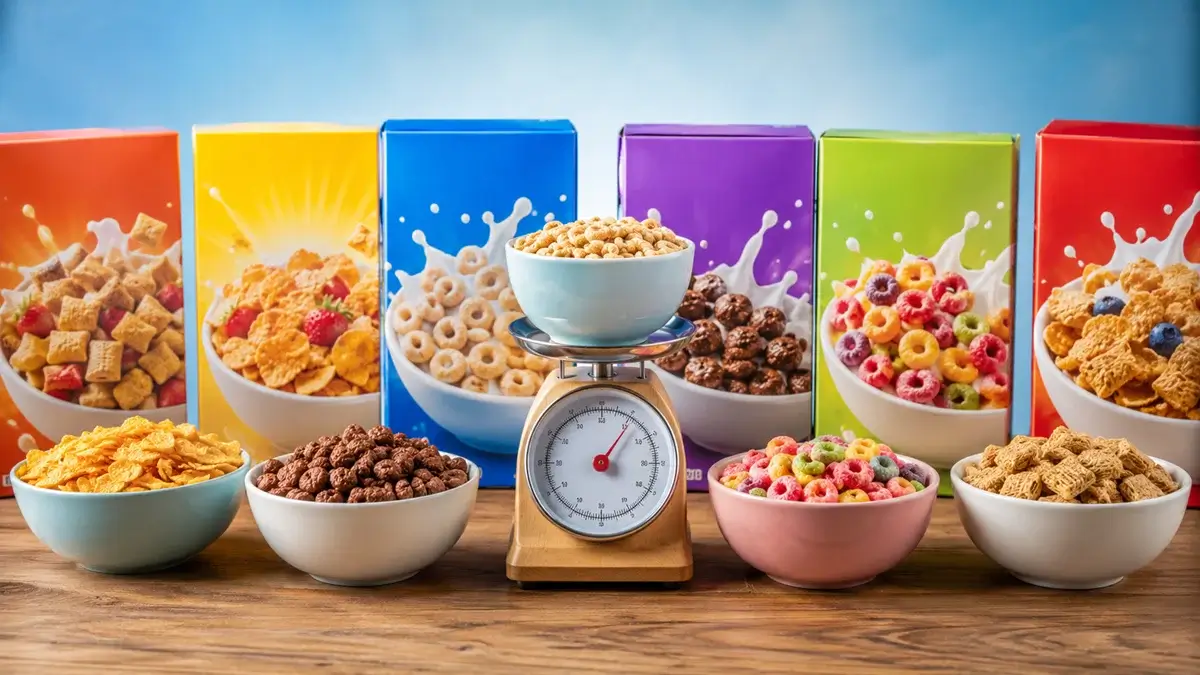
Several factors determine how much a box of cereal weighs. Although two packages may look almost identical on a store shelf, the amount of cereal inside can differ considerably. Manufacturers calculate product weight based on serving requirements, cereal density, packaging efficiency, and transportation costs rather than simply filling every carton to the same level.
The following factors have the greatest influence on cereal box weight:
- Cereal Type: Flaked cereals, puffed grains, granola, and cereal clusters all have different densities. Granola and protein-rich cereals are generally heavier because the ingredients are more compact, while puffed rice or corn cereals occupy more space with less weight.
- Box Size: Larger cartons usually hold more cereal, but box dimensions alone don’t determine the final weight. Some manufacturers increase package height or width to improve shelf visibility while keeping the net contents similar to a standard-size box.
- Serving Count: Nutrition labeling is based on serving sizes, so manufacturers often design package weights around the number of servings they want each box to provide. Family-size cartons simply contain more servings rather than using different packaging materials.
- Packaging Materials: Paperboard cartons, food-safe inner liners, and protective coatings add only a small amount to the total package weight. Packaging is engineered to remain lightweight while protecting cereal from moisture, crushing, and contamination during storage and transportation.
- Product Formulation: Ingredients such as whole grains, dried fruit, nuts, marshmallows, or chocolate pieces affect the final weight. Two cereals packaged in cartons with identical dimensions may have noticeably different net weights because their ingredient densities are not the same.
Understanding these factors explains why comparing box dimensions alone doesn’t always reveal how much cereal you’re actually buying. The printed net weight remains the most accurate measurement for comparing products across different brands.
Net Weight vs. Gross Weight vs. Packaging Weight
Many shoppers assume the number printed on a cereal box represents the entire package, but food labels follow specific measurement standards. Knowing the difference between net weight, gross weight, and packaging weight makes it much easier to compare products accurately.
| Weight Type | What It Includes |
| Net Weight | Only the cereal inside the package |
| Gross Weight | Cereal plus the carton, inner liner, and all packaging materials |
| Packaging Weight | The empty paperboard carton and plastic liner only |
| Shipping Weight | Gross weight plus any additional shipping carton or protective packaging |
Net weight is the figure displayed on retail cereal boxes because food-labeling regulations require manufacturers to tell consumers exactly how much edible product they’re purchasing. This measurement excludes every part of the packaging.
Gross weight becomes important during manufacturing, warehousing, and transportation because logistics companies calculate shipping costs using the complete packaged product. Retailers also use gross weight when planning case quantities and pallet loads for distribution.
Packaging professionals rely on both measurements throughout product development. While consumers focus on net contents, manufacturers balance gross weight carefully to reduce freight costs without compromising product protection.
How Much Does an Empty Cereal Box Weigh?
An empty cereal box weighs surprisingly little. The paperboard carton generally weighs only a few ounces or less, while the food-safe plastic liner contributes an even smaller amount. Together, the packaging represents only a small fraction of the total weight of a full cereal package.
Modern cereal cartons are manufactured from lightweight paperboard because it provides enough rigidity for stacking, shipping, and retail display without adding unnecessary material. The inner plastic liner creates a moisture barrier that helps preserve freshness and prevents cereals from becoming stale before the package is opened.
After use, most paperboard cereal cartons can be recycled through standard curbside recycling programs, provided they are clean and dry. Plastic liners often require separate recycling depending on local recycling facilities, so checking municipal recycling guidelines helps ensure proper disposal.
Businesses designing food cartons often choose recyclable paperboard because it combines durability with material efficiency. Similar construction methods are commonly used in Food Packaging Boxes, where protecting food quality while reducing packaging waste remains a primary objective.
Typical Cereal Box Dimensions
Standard cereal boxes are designed to fit retail shelves efficiently while providing enough space for branding, nutrition labeling, and product protection. Although cereal box dimensions vary by manufacturer, most regular cereal cartons follow similar proportions to simplify production, shipping, and merchandising.
| Box Type | Height | Width | Depth |
| Mini | 5–7 in | 3–4 in | 1–2 in |
| Single-Serve | 6–8 in | 4–5 in | 1.5–2 in |
| Regular | 11–12 in | 7–8 in | 2–3 in |
| Large | 12–13 in | 8–9 in | 2.5–3 in |
| Family Size | 13–14 in | 9–10 in | 3–4 in |
Larger dimensions don’t always mean significantly more cereal. A taller carton may improve shelf visibility while containing only a modest increase in product weight. Manufacturers carefully balance package dimensions with product density, shipping efficiency, and consumer convenience to create packaging that performs well throughout the supply chain.
Packaging engineers also consider how cartons stack on pallets, fit inside shipping cases, and withstand warehouse handling. Efficient structural design reduces material waste, improves transportation efficiency, and helps products arrive on store shelves in excellent condition without increasing unnecessary packaging weight.
Packaging Materials Used for Cereal Boxes
Cereal packaging is designed to keep food fresh while remaining lightweight, recyclable, and cost-effective. Modern cereal cartons combine durable paperboard with food-safe barrier materials to protect the product from moisture, light, and physical damage throughout storage and transportation. Manufacturers carefully select packaging materials because every additional gram affects shipping costs, sustainability goals, and overall production efficiency.
The most common materials include:
- Paperboard Cartons: Most cereal boxes are made from paperboard, a lightweight material that provides excellent print quality and enough strength for stacking on retail shelves. Paperboard is widely recyclable and allows manufacturers to create attractive graphics without adding unnecessary weight.
- Food-Safe Inner Liners: Nearly every cereal box contains a sealed plastic or recyclable barrier liner inside the carton. This liner protects cereal from moisture, preserves freshness, and helps maintain product quality long after production.
- Protective Coatings: Some cartons include moisture-resistant coatings that improve durability during storage and distribution. These coatings add very little weight but help prevent damage caused by humidity and normal handling.
- Sustainable Packaging Materials: Many food manufacturers continue reducing packaging waste by using responsibly sourced paperboard, recycled fibers, and lightweight carton designs. These improvements lower material consumption while maintaining the strength needed for shipping and retail display.
Businesses developing breakfast products often apply similar principles when designing Paperboard Packaging, balancing structural performance, product protection, and sustainability without increasing packaging weight.

Shipping Weight vs Retail Weight
The weight printed on a cereal box isn’t the same as the weight used during shipping. Consumers typically see the net weight, while warehouses, distributors, and shipping companies work with the gross shipping weight, which includes the cereal, retail carton, inner liner, shipping case, and any protective materials used during transportation.
This distinction becomes especially important for manufacturers shipping thousands of cereal boxes every day. Even a small increase in package weight can significantly affect freight costs across large shipments. Packaging engineers therefore focus on creating cartons that provide reliable protection while using only the material necessary to keep products safe throughout the supply chain.
Efficient carton design also improves pallet utilization, warehouse storage, and transportation efficiency. These same principles are commonly applied when developing Custom Packaging Boxes for food products that require both product protection and attractive retail presentation.
Common Misconceptions About Cereal Box Weight
Several misconceptions cause confusion when shoppers compare cereal products. Understanding how cereal packaging is designed makes it easier to evaluate different brands and package sizes accurately.
- Larger boxes always contain more cereal: Bigger cartons often improve shelf visibility, but they don’t always contain proportionally more cereal. Manufacturers may increase carton dimensions while leaving additional headspace inside to protect delicate cereal during shipping.
- Every standard cereal box weighs the same: Standard packaging dimensions are similar across many brands, but net weights vary depending on cereal density, serving count, and product formulation. Comparing only the physical size of two boxes can lead to incorrect assumptions.
- The printed weight includes the packaging: Food labels display the net weight, which refers only to the edible contents inside the package. The paperboard carton, plastic liner, and any additional packaging materials are not included in this measurement.
Final Thoughts
A box of cereal doesn’t have one standard weight because manufacturers produce multiple package sizes for different consumers and retail environments. Most regular cereal boxes contain 10-18 ounces (283–510 grams) of cereal, while mini boxes weigh considerably less and family-size cartons can exceed 24 ounces. Understanding the difference between net weight, gross weight, and packaging weight helps consumers compare products more accurately and explains why similarly sized boxes don’t always contain the same amount of cereal.
Whether you’re choosing cereal for your household, comparing product value, or researching food packaging, checking the printed net weight remains the most reliable way to understand how much cereal you’re actually purchasing.